Free Shipping & 30 Day Returns
Free Shipping & 30 Day Returns
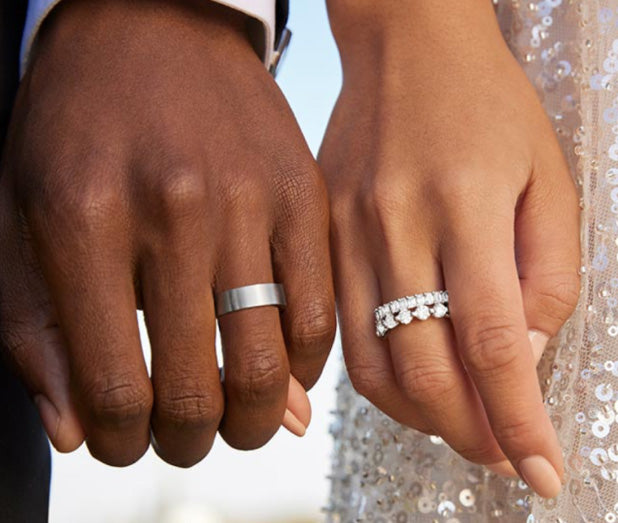
Choosing a diamond becomes much simpler once you know what actually changes how it looks — and what matters far less than people often assume.

It usually changes what you see more than any other diamond detail.
It affects how warm or white the diamond appears in the ring.
Not every inclusion changes what the eye actually notices.
Size matters, but proportion and balance matter just as much.
If you only remember one thing, remember this: cut usually changes how a diamond looks more than any other single factor.
Many people begin with carat weight or clarity because those are the details that sound easiest to compare on paper. In reality, a beautiful diamond is not the result of one strong number. It is the result of balance.
A diamond that is well chosen will look bright, lively, and natural in the ring. One that looks impressive on a certificate but lacks balance can still feel disappointing once it is seen in real life.
The strongest approach is not to chase the highest possible grade in every category. It is to understand which details actually affect what you see, and where you can make a more intelligent trade-off.
Most diamond choices come back to four main areas: cut, colour, clarity, and carat. The key is understanding that they do not all carry the same weight.
Cut affects how well the diamond handles light. It is the reason one diamond looks bright and lively, while another feels flat even when the other specifications look strong.
Colour measures how white or warm the diamond appears. The best choice depends on the look you prefer, the metal of the ring, and how sensitive you are to tonal differences.
Clarity refers to internal features and surface characteristics. Some matter visually, while others barely affect what you actually see once the diamond is worn.
Carat is the weight of the diamond, not a measure of beauty. A larger diamond is not always the better-looking diamond.
Cut is what brings a diamond to life. It affects brilliance, light return, and the sharpness of the sparkle you see when the stone moves.
This is why cut matters so much. Two diamonds can have similar colour, clarity, and carat weight, yet look completely different once placed side by side. The one with the stronger cut will usually look brighter, cleaner, and more alive.
A poorly cut diamond can appear dull, dark in the middle, or less balanced in shape. A well-cut diamond tends to look more confident without needing anything else to compensate for it.
That is why cut is usually the first place to focus if the goal is to choose a diamond that looks beautiful in the ring, rather than simply one that sounds impressive on paper.

Colour is about tone. The lower the colour grade, the warmer the diamond is likely to appear. The higher the colour grade, the whiter it will usually look.
In practice, not every buyer needs the highest colour range. The difference between one grade and the next is often more subtle than people expect, particularly once the diamond is set.
Metal also changes perception. A warmer diamond may feel more natural in yellow gold, while a cooler white diamond may feel more at home in platinum or white gold.
The right question is not “What is the best colour?” but “What colour feels right in the ring I actually want?”
Clarity is one of the most misunderstood parts of diamond buying.
People often assume that a higher clarity grade will always make a diamond look better. Sometimes it does. Very often, it changes far less than they expect.
What matters is whether the diamond looks clean to the eye in normal viewing, not whether the certificate is as high as possible. A diamond can carry a strong clarity grade and still fail to impress if other areas are weaker. Equally, a diamond with a more balanced clarity choice can look excellent once it is worn.
The goal is not perfection under magnification. It is choosing a diamond that looks clean, bright, and right in real life.
Carat measures weight, not visual beauty. It tells you how much the diamond weighs, but it does not tell you how large it looks, how well it is cut, or how balanced it feels in the ring.
Two diamonds with similar carat weight can look noticeably different in size. Shape changes this. Cut changes this. Proportion changes this.
That is why carat should not be chosen in isolation. A larger diamond with weaker balance can look less elegant than a slightly smaller one that has been chosen better overall.
Size matters to many people, and there is nothing wrong with that. But the most attractive result usually comes from balancing size with cut, colour, clarity, and the final style of the ring.

There are two main routes when choosing a diamond: natural and lab-grown.
Both can be relevant depending on what matters most to you. Some buyers care strongly about natural origin. Others are more focused on value, flexibility, and choosing the final ring they really want.
This guide is about how to choose a diamond well in general. If you want a more specific comparison between natural and lab-grown diamonds, the clearest next step is to read our Lab Diamond Guide.
The process becomes much easier once you stop trying to optimise every specification at once.
Round, oval, pear, emerald, cushion, and marquise all create a different feel. The best starting point is the shape that suits the ring you want and the look you are drawn to.
If the diamond does not handle light well, stronger numbers elsewhere will not rescue it.
Think about metal tone, overall look, and how white you actually want the diamond to appear.
Do not pay for a level of clarity that changes very little visually unless that matters personally to you.
Choose the size that feels right, but not at the cost of the diamond looking less beautiful overall.
Shape changes the entire personality of a diamond. It affects not only the outline of the stone, but how it feels in the ring and how much presence it creates on the hand.
The clearest way to understand how a diamond feels is to see it in the context of a real ring.
We focus on diamonds that look beautiful in real life — not just on paper.
Choosing a diamond should feel clear and considered, not overwhelming.
A diamond is never chosen in isolation. It needs to work with the shape, setting, and overall balance of the ring.
From sizing to service, the experience matters beyond the point of sale.
For most people, cut matters most because it changes how the diamond looks in real life more than any other single factor.
Usually, yes. A well-cut diamond often looks better than a larger diamond with weaker light performance.
That depends on your preference, the metal of the ring, and how sensitive you are to warmth in the stone.
Not always. Many buyers pay for clarity that changes little once the diamond is viewed with the eye rather than under magnification.
It depends on what matters most to you. If you want the clearest comparison, read our Lab Diamond Guide.
Yes. We can help you balance cut, colour, clarity, carat, and shape so the final ring feels right overall.
Explore rings designed around carefully chosen diamonds, balanced beautifully for the way they will actually be worn.


